
The Rise of the AI-Native Phone: From Assistants to Action - Six Five In The Booth
SHARE


Div Garg, Founder & CEO of AGI, joins Nick Patience at MWC 2026 to discuss the rise of the AI-native phone, the shift from assistants to agents, and how on-device AI will reshape trust, privacy, and mobile business models.
At MWC Barcelona 2026, the conversation around AI phones moves beyond chatbots and voice assistants, toward AI-native devices capable of taking real action across apps and services.
For Six Five In The Booth, host Nick Patience is with Div Garg, Founder & CEO of AGI, to explore what it will take for agentic, on-device AI to move from hype to everyday utility.
As smartphones evolve into proactive, intelligent systems, trust, performance, and privacy become defining factors in adoption.
Highlights include:
🔹 What is fundamentally different about this wave of AI-native phones
🔹 Why behavioral trust, not just model accuracy, is the real adoption barrier
🔹 Where on-device inference outperforms the cloud for agent tasks
🔹 How local vs. cloud AI will shape privacy and performance tradeoffs
🔹 Whether agentic AI becomes a durable moat or fast-following table stakes
🔹 How intelligence as the interface reshapes app ecosystems and monetization
As AI becomes embedded into the device itself, the phone transitions from assistant to actor.
Watch the full conversation at sixfivemedia.com and subscribe to our YouTube channel for more insights from MWC 2026.
Disclaimer: Six Five In The Booth is for information and entertainment purposes only. Over the course of this webcast, we may talk about companies that are publicly traded, and we may even reference that fact and their equity share price, but please do not take anything that we say as a recommendation about what you should do with your investment dollars. We are not investment advisors, and we ask that you do not treat us as such.
Div Garg:
We feel like agents are very hard to get right, in a sense. So if you look at open cloud, it's like a great demo, but it's like, how many people actually use it every day, right? And there's so many things that can go wrong, like the reliability part, the security parts. So we think what needs to happen is there needs to be a leader in the space who really, really is thoughtful about how do you make the best agents possible.
Nick Patience:
Hi, I'm Nick Patience, the AI Platforms Practice Lead at Futurum, and here we're Six Five In The Booth at MWC Barcelona, and today we're going to explore what it really takes for agentic on-device AI to move from hype to everyday utility, and what that shift means for the broader mobile ecosystem. We're joined today by Div Garg, the founder and CEO of AGI Inc. Welcome, Div. Thank you. So we've been promised smarter phones for over a decade, I guess. So what's fundamentally different this time? What would still prevent this wave of AI from going mainstream?
Div Garg:
So if you look at the wave of AI assistance, there have been companies like Apple, Google, Amazon, who has been working on AI products for a while, like almost a decade now, but nothing has taken off. So if you look at Siri, for example, it was a great vision when Steve Jobs came up with it, but no one actually uses it, because technically it was just not there. And we just think now is the time when AI is starting to take off, and agency is going to be the next big thing, which is once this is present in every device, that is going to change how we go and interact with your phones, your PCs, and every other smart device you might have. We're very bullish on how can we make these assistants that are taking control of your phone, you can talk to it, it's doing things for you. And it's already happening. We have some of the world-class leading technology. that are now available to our partners, including Qualcomm, and they are showcasing our demos in their booth, which is like a great milestone for us as a company.
Nick Patience:
So, adoption always sounds great on stage at places like MWC, but behavioral changes are always hard. So, what has to happen for users to trust their device enough for this to work? And what are the barriers? Are there barriers like accuracy, privacy, UX, or something else?
Div Garg:
Yeah, well, I'll say it's pretty much everything that you listed. It's a very complex, multifaceted problem. And you have to kind of think from scratch. Like, first principle-wise, how can we go and build this solution so this is the best user experience possible for a user? And so we start from the users, and then we break down into what is required on the R&D side? What is required on the engineering side? How do we build this into a world-class product? And the world we are imagining is like an app-less phone. Like, imagine you buy a phone, and it does not have any apps. You just talk to it, and things happen on the fly. So I can ask you to maybe book me an Uber, order me a DoorDash, and we'll generate all the UI on the fly. And the question is, how do you do that? It seems very groundbreaking. And so we have spent almost one year coming up with all the technology. We build our own models in-house. We have our own product teams. We do a lot of user research. And we think if we succeed, this is going to be the next big thing.
Nick Patience:
So you have your own models as well, yeah? Yes, we do. OK, interesting. So your team has posted leading results on the Android World Benchmark, which is specifically, I believe, about on-device agents and agentic performance. So where are you seeing local inference actually outperform cloud for agentic tasks? And where do you see the gap is that might still make on-device inference impractical? That's actually a very great question.
Div Garg:
So for us, we just think a lot of these agents have to be running fully on the device, especially for the user privacy, and also zero dollar inference cost. And so just throw some numbers. If you're a big device manufacturer, say Samsung or someone else, and you want to launch an agent on consumer hardware that's scaling to 100 million plus consumer devices every year, that's a giant number of devices, and the cost for running AI on that is going to be humongous. And we're talking about numbers that are like $10 billion or plus annually. And no company in the world can support that. Even if you're Apple, they are not willing to pay $10 billion for this, right? And so the only way to make this happen at scale for what is required is that the model has to be small enough that it's running on the device. And at that point, you are able to bring down the cost to $0. And this becomes something that's really, really magical for the users. It's fully private. All your data stays on the device. I can trust the AI with my credit cards, with my passwords, and anything that I want. And I don't have to worry about any hacker going in and trying to steal this.
Nick Patience:
So the model's on the device, the data is on the device, and so it's all kept private. You don't need to keep talking to the client.
Div Garg:
Yeah, and it's the best of all worlds. It's like you get the best latency, the best privacy, and the best reliability.
Nick Patience:
So for OEMs and carriers, differentiation's been tough in the market out there. a lot of the hardware looks quite similar at this stage of maturity. So is agentic AI a real competitive moat, or does it risk becoming like table stakes again in a year or two like a lot of other things?
Div Garg:
Sure. We feel like agents are very hard to get right, in a sense. So if you look at like open cloud, it's like a great demo, but it's like how many people actually use it every day, right? And there's so many things that can go wrong, like the reliability part, the security parts. So we think, like, what needs to happen is there needs to be a leader in the space who really, really is thoughtful about, like, how do you make the best agents possible? And to just give a sense, there are millions of apps out there. You want to have an agent that can use all these different apps, form factors, work across, like, different, like, devices, like your PCs, phones, any sort of new smart device that comes out. That's a very hard problem. And that's only possible if we go all in and focus. And I was like, how do we support all this suite of devices and build the best experience for the user? And so I think it's very hard for this to become a fully table stakes operation. There needs to be some one company that's focused on the user excellence, and it's about to build those things.
Nick Patience:
And the devices are performant enough to handle this now, you think? Yes. And so if intelligence becomes the primary interface, as we were talking about, like an appless kind of phone, so replacing taps, swipes, and search, and all those other functions, how does that reshape the app ecosystem, the mobile world, models, and platform power over the next couple of years, say?
Div Garg:
I will simply say I think everything is going to change. I'm not sure if you'll need something like an app store anymore or you'll be downloading apps anyways. Because what's going to happen is instead of you as a human going and using the phone and using the apps like you do with your hands, you won't be doing that anymore. You'll just be talking to the phone and the apps will evolve to become agent tech. So you'll just have an AI and you talk to the AI and the AI figures out what to do automatically.
Nick Patience:
Thanks for tuning in to Six Five in the booth here at MWC Barcelona. Subscribe and check out all our coverage at SixFiveMedia.com. Thank you.
MORE VIDEOS
.png)
The Main Scoop Ep. 45: Attackers Only Need to Be Right Once. AI Just Made That Easier.
Chad Rikansrud, R&D Software Security Engineer at Broadcom, explains how frontier AI models are finding decades-old mainframe vulnerabilities in seconds, collapsing the complexity advantage that once protected legacy platforms. He outlines why enterprises need faster Security Intelligence (SECINT) ingestion and disciplined human oversight to keep pace with adversaries wielding the same tools.


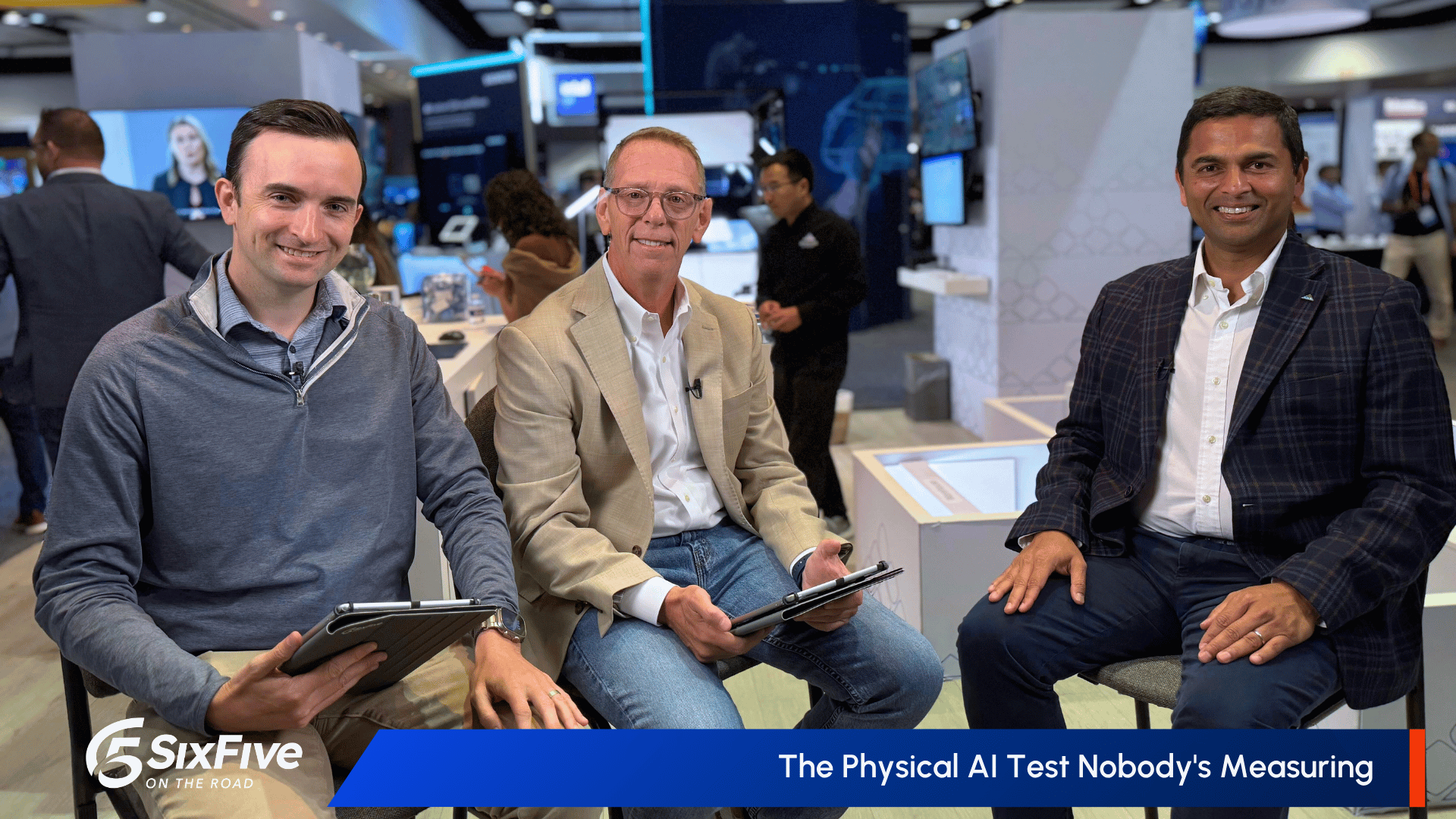
Fleet-Scale Deployment Is the Physical AI Benchmark
Physical AI is shifting from lab prototypes to fleets of machines operating reliably in the real world, and Ambarella's Muneyb Minhazuddin joins Six Five On The Road at AI Infra 2026 to explain what that shift demands of silicon, memory and developer workflows. Minhazuddin traces the case back to a 22-year-old chip architecture and forward to a developer cloud built to compress model porting time from months to days, and he identifies enterprise ROI proof points as the biggest hurdle left before physical AI scales into millions of deployed units.
.png)
AI Safety Alarms, China's Distillation Reckoning, and Qualcomm's AWS Breakthrough: A Pivotal Week for Enterprise AI
A viral AI extinction claim, a federal advisory naming six Chinese AI labs for industrial-scale distillation, and a $60 billion Qualcomm-AWS silicon pact define a week when enterprise AI risk and opportunity collided head-on. Patrick Moorhead and Daniel Newman weigh in on what's signal and what's noise across AI safety, chip supply deals, and a market rally still betting big on compute.
Other Categories
CYBERSECURITY
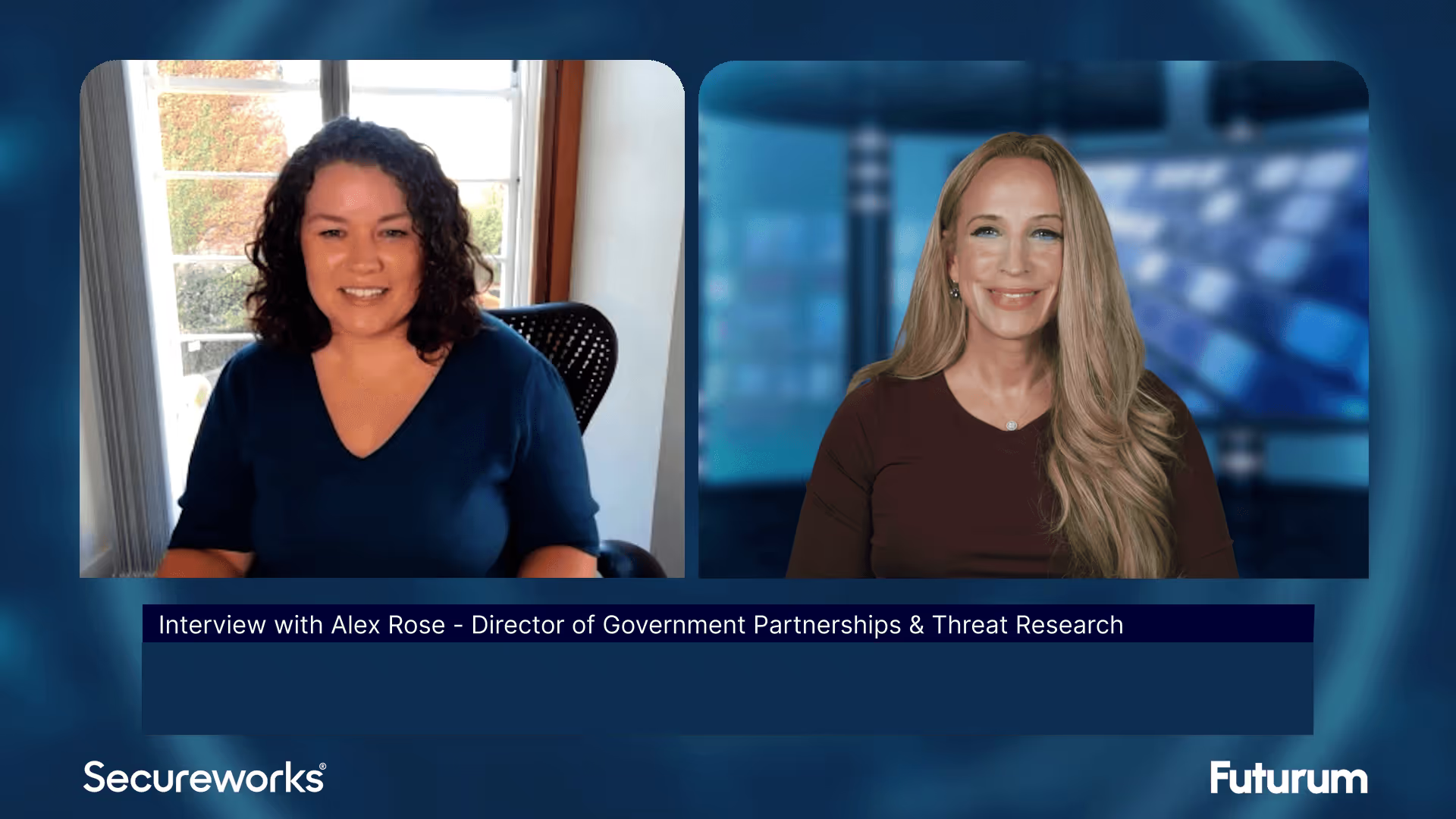
Threat Intelligence: Insights on Cybersecurity from Secureworks
Alex Rose from Secureworks joins Shira Rubinoff on the Cybersphere to share his insights on the critical role of threat intelligence in modern cybersecurity efforts, underscoring the importance of proactive, intelligence-driven defense mechanisms.

HP Launches World’s First Business PCs to Protect Against Quantum Hacks - The Six Five On the Road
On this episode of the Six Five - On the Road, hosts Patrick Moorhead and Daniel Newman are joined by HP's Ian Pratt, Global Head of Security for Personal Systems.
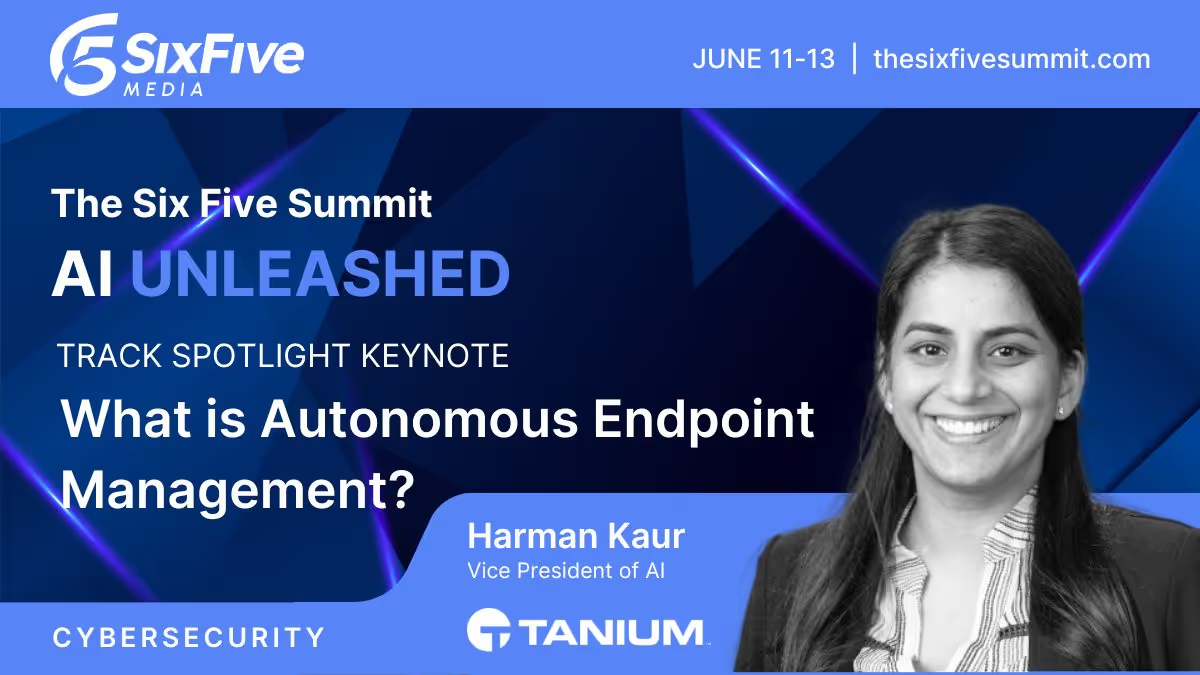
What is Autonomous Endpoint Management?
Autonomous Endpoint Management is a framework designed to unify IT operations and security teams on a single platform through real-time control and visibility.
QUANTUM
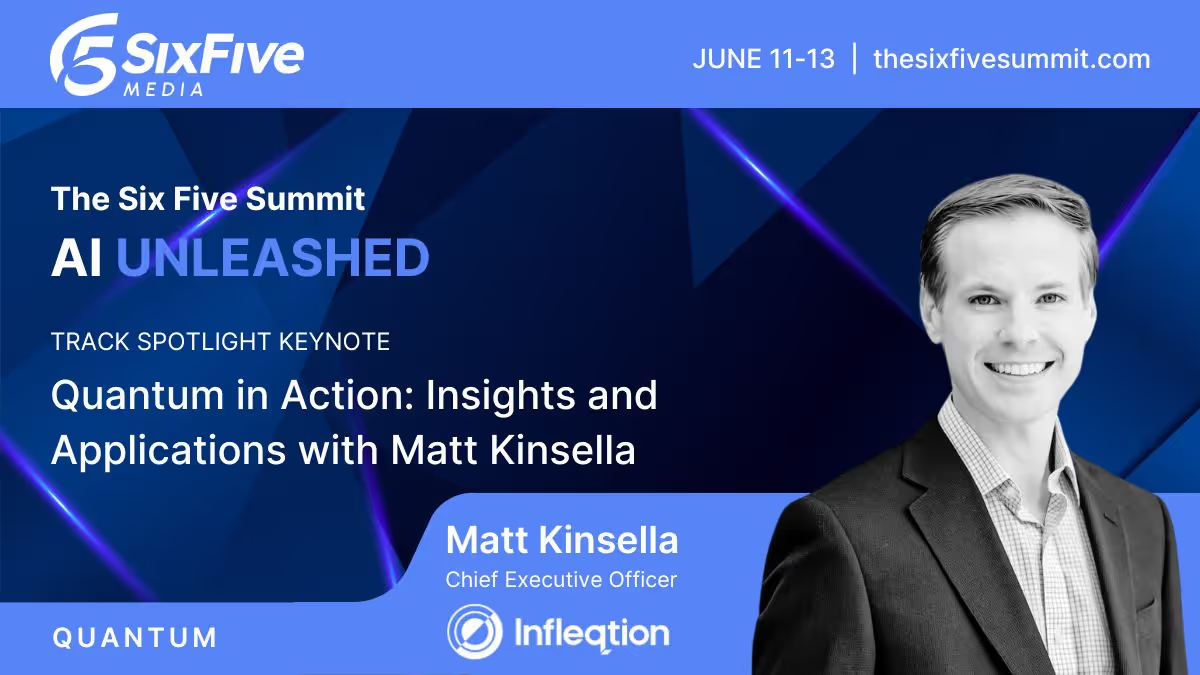
Quantum in Action: Insights and Applications with Matt Kinsella
Quantum is no longer a technology of the future; the quantum opportunity is here now. During this keynote conversation, Infleqtion CEO, Matt Kinsella will explore the latest quantum developments and how organizations can best leverage quantum to their advantage.
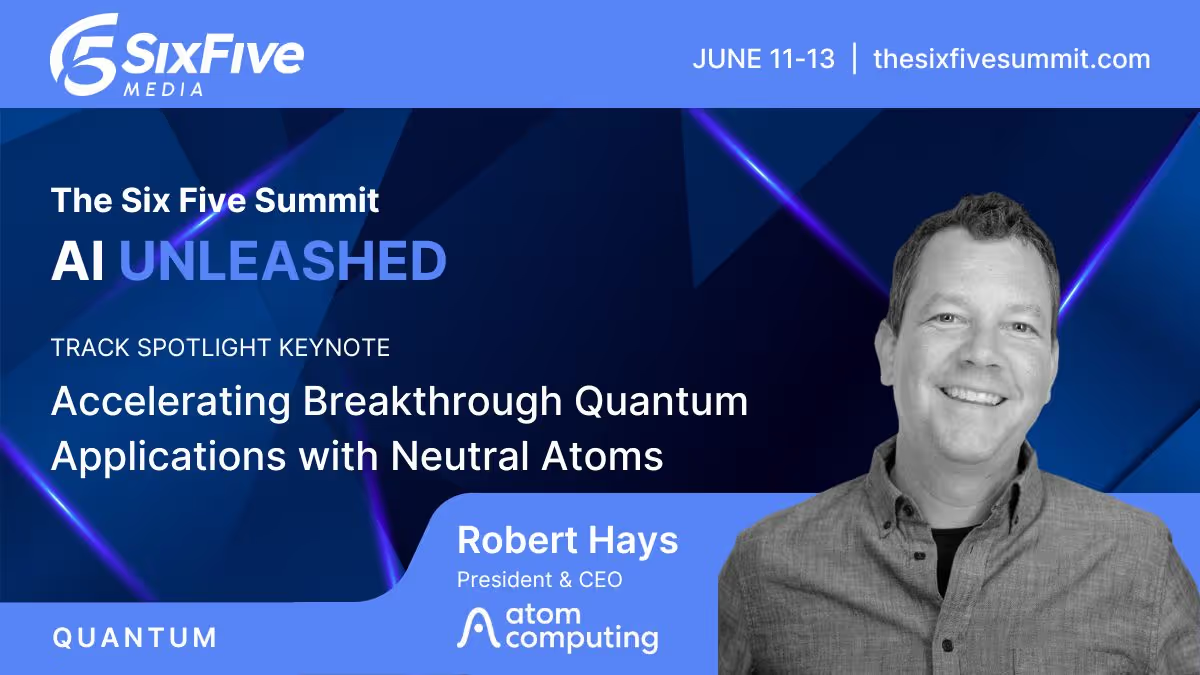
Accelerating Breakthrough Quantum Applications with Neutral Atoms
Our planet needs major breakthroughs for a more sustainable future and quantum computing promises to provide a path to new solutions in a variety of industry segments. This talk will explore what it takes for quantum computers to be able to solve these significant computational challenges, and will show that the timeline to addressing valuable applications may be sooner than previously thought.