
The Six Five Pod | EP 297: AI Control, Compute Power, and the Fight for the Stack
SHARE


AI is becoming a scale and control business. On Episode 297 of The Six Five Pod, Patrick Moorhead and Daniel Newman examine the companies building the infrastructure, forming the alliances, and making the moves that will define who wins and who gets squeezed out. Control is shifting across compute, models, infrastructure, and enterprise distribution as NVIDIA, Microsoft, OpenAI, Meta, and others push to control the next phase of the AI market.
The handpicked topics for this week are:
- NVIDIA’s Full-Stack Push Gets Bigger: Following the GTC conference in San Jose, Pat and Dan break down how NVIDIA continues expanding beyond GPUs with Vera CPU, Dynamo, and a broader agentic AI stack designed to unify training, inference, orchestration, and enterprise-grade security.
- Microsoft, OpenAI, and Amazon Enter a New Phase of Tension: With Microsoft reportedly weighing legal action over OpenAI’s growing AWS relationship, the discussion turns to exclusivity, multi-cloud strategy, and what happens when one of AI’s most important alliances starts to crack.
- China, Compute, and the Geopolitics of AI Access: The hosts examine NVIDIA’s reported H200 restart for China and what it says about export controls, policy pressure, and the global fight over advanced AI compute.
- Meta’s $27B Infrastructure Agreement Signals the Real Race: Meta’s latest infrastructure deal reinforces a central point of this episode, demand for AI capacity is still outrunning supply, and hyperscalers are moving aggressively to lock in long-term compute.
- OpenAI’s Enterprise Push Raises Bigger Business Model Questions: As OpenAI leans harder into enterprise and eyes an eventual IPO, Pat and Dan unpack what this pivot says about monetization pressure, competitive positioning, and the need to prove a durable AI business model.
- The GPU Smuggling Story Shows How Valuable AI Hardware Has Become: A major smuggling case involving NVIDIA hardware spotlights the black market for AI chips and the growing intersection of compute, national security, and enforcement.
- The Flip: Did NVIDIA Just Change the Inference Market Again? This week’s debate centers on whether NVIDIA’s $20bn Groq Technology deal kills the standalone inference chip market, or whether it actually validates the market by proving just how strategically important specialized inference has become.
- The Fed, Micron, and Accenture Reflect a More Complicated Market: In Bulls and Bears, the hosts cover the Fed’s latest decision, Micron’s AI-driven momentum, and why Accenture’s results still ran into skepticism despite strong execution.
- Meta’s Workforce Cuts and AI Spend Reflect the New Corporate Tradeoff: The episode closes on the growing tension between rising AI investment and labor efficiency, as companies look for ways to fund massive infrastructure and token budgets while restructuring headcount.
For a deeper dive into each topic, please click on the provided links. Subscribe to our YouTube Channel so you never miss an episode.
Listen to the audio here:
Disclaimer: The Six Five Pod is for information and entertainment purposes only. Over the course of this webcast, we may talk about companies that are publicly traded and reference share prices, but nothing discussed should be taken as investment advice. We are not investment advisors.
Daniel Newman:
What up, what up, what up, what up? It is another week. We are back. I don't know what day it is for you all out there that's listening to this, but it's Friday morning for Pat and I. We are back in the chair. We are back at home. Big week in San Jose, California. Was that 38,000? I think ended up being the number that all came to hear what Jensen had to say. We'll talk about that today. But buddy, before we hop into this week's pod, how's it going? How you doing? What's up?
Patrick Moorhead:
Yeah, it's good to see you, you know, feeling good back for a couple of days. My HRV is going up. I just needed a couple. Good night. Good night's sleep. Woke up at 345 last night, just started doom scrolling and never went back to sleep. So we're going to see how many times I slip today. Maybe we'll have AI. It's brutal. It is.
Daniel Newman:
3:45.
Daniel Newman:
Like what time did you go to bed? Like seven?
Patrick Moorhead:
No, that was more like 10. You know, the time change, it's been hard to get to bed, get to bed early. And we did that West Coast trip, just kind of mucking, but still it's better. You know, my HRV and I look at my stats right now are better, a lot better than they, a lot better than they usually are or should be. So feeling pretty good. Get a personal, personal best on flat bench. Feeling pretty good. Shoulders coming back.
Daniel Newman:
All right. All right. All right. All right. Flat bench. 315, what is it?
Patrick Moorhead: Or 405? At least, whatever four plates in each side is. I have a video that's doing it.
Daniel Newman:
You should share that. The producer should put that one in here so that everyone can see you and Hegseth.
Patrick Moorhead:
That's not created on Sora.
Daniel Newman:
You and Hegseth doing the weight. Exactly.
Patrick Moorhead:
Crushing it, man.
Daniel Newman:
Yeah, it's great. I was going to ask you if you got one into you. You didn't sleep, but you still got one in. That's great.
Patrick Moorhead:
And you know, no, my, uh, my trainers out and, uh, my sub trainer was in and he blew me off this morning. So I'm not too thrilled about that.
Daniel Newman:
So your, your, your trainers out, your sub trainer, no showed and you still crushed it.
Patrick Moorhead:
No, I didn't even go into the gym. I'm going to work out with you bestie tomorrow.
Daniel Newman:
Oh, okay. I thought you said you did a PB today. It was yesterday.
Daniel Newman:
Okay.
Patrick Moorhead:
That's good. Let's dive in there. I did a pre-show write-up, I did a post-show write-up, and then I did a post-post-show write-up about partners. Check them out on X. I got almost 400,000 people to read the first one or at least look at the first sentence. I'll be pretty happy about that. Pretty much most everything that I predicted came true. And this was not when I was pre-briefed, obviously, I wouldn't write that, but pretty much NVIDIA came in and Rubin, sorry, Rubin was the talk of the town, right? It's next generation, multiple chips and everything that goes in it. I mean, one of the big surprises for me was, oh, there's a CPU rack, a full CPU AI rack. That's interesting, I thought they would have been interspersed in a rack with other GPUs, but I guess it's the orchestration and reinforcement learning rack or whatever else you want to do with the CPU. And then there was… there was Grok and how that was integrated. I thought it was really interesting that they just basically put a server in. And the other thing I said needed to happen was you need to put software across that to be able to orchestrate those workloads. And that's where Dynamo 1.0 comes in, right? It goes across every single piece of Silicon that NVIDIA does and it orchestrates it. depending on what you actually want to do. Some hyperscalers will use Dynamo, some will create their own to do orchestration, particularly if they've got to orchestrate across AMD or TPU or something like Tranium or Maya. But it was impressive nonetheless. Then what NVIDIA did is they raised the stakes even more, even to the AI application platform. with Nemo Claw integrating Open Claw into NVIDIA's Enterprise Security and Privacy Control. So essentially what that does is it turns Open Claw into an enterprise grade tool. So those were my highlights. I mean, there was the $1 trillion number that came out that Daniel, you very eloquently say, hey, it's for 18 months and two product cycles. It's not into eternity. It also doesn't include CPUs or LPXs.
Daniel Newman:
That's also revenue, which is different than bookings. By the way, people screw this up all the time. That is different and people seem to miss that.
Patrick Moorhead:
Yeah. No, I think that's a big deal. I mean, you would hope, right, with the amount of inventory, I think even NVIDIA was bragging on how quick the difference is between bookings and revenue. I forget if they said 30 days, but it was a pretty small amount. I think the final thing I want to say after saying that I'm done talking about this is I do think it's super interesting. I still have no idea how they did the CPU benchmarks. No clue what they used, what they tested against. And then, you know, AMD came out, you know, with some pretty rocking performance numbers against the, I think it was the B200. on some popular workloads where it just shows that AMD smokes NVIDIA at least the B200 on certain inference runs. So may the benchmark games begin now. Go.
Daniel Newman:
That's okay. There's a B900 about to come out or a Rubin. By the way, what you just bought, it's not that useful anymore. It's time to upgrade everybody. That's always one of the biggest things I try to understand how he manages the whole, as there's like 10 companies in the audience that are spending hundreds of billions of dollars implementing Blackwell right now. And he's like, oh, but we can get you 10 times better. So start putting Rubin in.
Patrick Moorhead:
It's like, Well, how funny was it when he was introducing Blackwell, he said H200s are worthless and now fricking Amperes are sold out, right?
Daniel Newman:
Well, that's the point is like, you know, there is this kind of two sides of the argument. It's like the next thing is like, what, 10 to 30 times better depending on the architecture of these token machines. But at the same time, like we have spot prices rising on A100s and H100s to date. But at least now we know how China trained those models. Anyway, so I came into the event. I basically, I also had a post. It wasn't quite as viral as yours, but it was okay. But I kind of had a five theme post that I said, you know, my themes were going to be about the inference inflection, agentic AI in the enterprise, physical AI, energy and infrastructure, and the software moat. I think, you know, on the inference inflection, I think we nailed it. I mean, we knew that this Grok, this almost $20 billion investment wasn't for nothing. And we knew that there was going to be a focus on saying, hey, we will deliver heterogeneous computes. We will offer, you know, compute variations for, you know, high volume inference language models. And I think it was a kind of a nice way for him to walk back his commentary about custom chips without walking back his commentary on custom chips. He's like, cause he's still staying down the path that you don't need custom. But I think he kind of acknowledged why custom existed because the GPU isn't necessarily optimized for everything. On agentic AI, I think the Nemo claw move is, I mean, look, you and I are perplexity computer machines. I'm pretty sure I read something you wrote yesterday about you can't even get through a workout anymore without checking on your agents. You need to talk to them about not making mistakes and working where you don't have to watch them all the time. It's very, it's very unsettling that now you're finally managing people.
Patrick Moorhead:
I need an agent for an agent, agent management system.
Daniel Newman:
But I mean, actually, that's a great thing to think about hacking. Like, how can you consolidate all the managing and ask one agent to start managing many of your sub-agents? So you only have to manage one agent. I don't know, something to think about. Physical AI, you know, I thought it was actually understated, yet there was a lot that happened there. I mean, BYD, Mercedes, Hyundai, Nissan, you know, all in the RoboTaxi platform. Joining already, by the way, Mercedes, I think Toyota and GM, what was it? Next generation of Alpamayo. And by the way, all these things are going to get better with Rubin. That's like the thing that everybody kind of realizes, look how much better things got with Blackwell. And now we have this whole next generation, which, by the way, I can't even imagine. Like, I'm really struggling to imagine how much better this stuff gets on these next generation chips. And, you know, the energy thing was a big play pad. I mean, Vera Rubin is what, 10 times performance per watt, 10 times better. So it's like, yes, it's going to use more power, but it's delivering exponentially more performance. Yeah. And the last thing I'll say is like, it's really hard to not just, you know, praise a trillion dollars in revenue in 18 to 20 months. I mean, Pat, they're not, this is not a company selling knickknacks, you know, cause Amazon's on that track, but like, I mean, they're selling knickknacks. I mean, they have a high volume, low margin. This is a guy drawing a trillion dollars in revenue with 75% margins. I just want a little piece of that, Jensen. Whenever you get a chance, send a little commission check my way or something. Anyway.
Patrick Moorhead:
I think I'd be lucky if you get a rack of GPUs, dude. Now you need seven racks of stuff, okay? To do what one rack did.
Daniel Newman:
Well, let's just say we crushed it, buddy. We did. We really got our calls right. We usually do. And I'm glad though. I'm glad the market appreciated the content because we were everywhere. And by the way, Dylan wanted to say thanks for you picking up his question on CNBC. Yes. I wanted to thank you because I was so freaking awkward. That whole moment was so awkward.
Patrick Moorhead:
Yeah. You know, it's hard. It really is hard. when you're on camera and sometimes you don't hear it, you've got the eyes in your ear. And by the way, Jensen was still talking. And there was a jumbotron in front of us as stuff was going on.
Daniel Newman:
Squirrel! If you were ADD. No, I'm just kidding. I have no idea what happened, but just from a viewer's standpoint, it was awkward. I'm sure there was something technically that created that moment. All right, so here's one. Microsoft now is threatening to sue OpenAI over its deal with Amazon AWS. This is really interesting. And, you know, I was reading into this. This is basically like, you know, I always I think I've said on this show before that Sam Altman's diabolical. This is like the diabolical move. So, you know, one of the things that when, when Microsoft renegotiated, it's 49% down to it's 27 and got 49% profit to 27% of equity or whatever it is, I think it's 27. There was a couple of like subterms in that deal. And one of them was that basically all the API calls for OpenAI would run through Azure. So basically, Sam was free to go out and do his deals and infrastructure deals. But one thing he wasn't free to do is basically find a way to go around the API of commit going through the Azure stack. But basically, it looks like OpenAI worked to build some sort of end around using a stateful agent environment, I think is the word, that basically does API calls without doing API calls. It was basically like, we're going to do the same thing and call it something else. Now, Microsoft realizes that if this works well, this is going to enable a whole bunch of the expected revenue and run that goes through that software, through the APIs, through Azure to go another direction. So where we started was a marriage, multiple billions of dollars, 49%. We're going to go hand in hand into the future together to now open AI has deals with every cloud, every chip maker, every Neo cloud. And basically they're willing to go and do whatever it takes. to give themselves an advantage. So what's interesting, Pat, by the way, here is where does this leave Amazon? Because like OpenAI, by the way, you know, I mean, this could be problematic for them, you know, and it certainly could be problematic for that IPO they want to do. But for Amazon or others that are using this kind of stateful agent environment. I'm just getting used to saying that. You gotta wonder if they become culpable, if they know OpenAI, the expectation of OpenAI and the fact that that's the rule. It'll be really interesting to see how non-technical juries might look at something like this.
Patrick Moorhead:
Yeah, I mean, they're already negotiating in public, right? Here's a quote from a Microsoft lawyer. If Amazon and OpenAI want to take a bet on the creativity of their contractual lawyers, I would back us, not them. That was pretty good. I mean, listen, they're both, you know, everybody's got too much invested for something to go haywire and the stateful versus stateless thing. is interesting and I can appreciate it more after doing vibe coding and the difference between that. So I think it's like doing functions versus a straight up API. But something I guess you should be aware of. And I think from an enterprise, if you're an enterprise CIO, a Fortune 500 CIO, you need to ask, well, which cloud platform? will host OpenAI's most advanced tools. Is it Azure for API, AWS for frontier agents, or maybe both for potential workloads, and then you're in a multi-cloud scenario. And I think there's a lack of Lack of clarity there. This has to get obviously straightened out before their IPO. The other overhang that they have is Elon Musk is still suing them.
Daniel Newman:
Yeah, that too. Now you have Microsoft and Musk, what's next?
Patrick Moorhead: Why don't we sue them for some reason?
Daniel Newman:
Well, why don't they just go after and build like the, uh, they can build the Vora ribbon chip and they will put it out and, uh, you know, they can get sued by Nvidia while they're at it. Um, wow. Well, anyways. Okay. Okay. That's a lot. Um, all right, let's keep moving. You know, did you, did you want to talk at all about, you know, just, just while we're here, like, do you want to talk about what's going on with the H 200?
Patrick Moorhead:
Yeah, I think this is the 32nd time we've discussed it, but I think it's still good. I said Yahoo Finance in January, the deal is not done until the chips are shipped and the payments are received. That's kind of where I was on this. I think the timing is interesting, right? of how this came out at GTC. I think this is all about the negotiating game that President Trump has going into the meeting with Xi. He's gonna bring in this, he's gonna bring in Iran, he's gonna bring in Venezuela, he's gonna bring everything in there and have the, I think he, you know, maybe this is an olive branch. I have no idea, but we will see.
Daniel Newman:
Yeah, no, I don't, I think you've said enough. I just wanted to point out that this is the on again, off again. This is what, you know, I like to kind of go online when this kind of crap comes out and just basically say it's crap. I mean, I'm so, it's just amazing. Like, isn't our news cycle just kind of amazing at this point though, Pat, like that these stories keep getting story time. Like, are we just that bored? Is the 24 hour news cycle like that light? Then there's nothing to talk about. I mean, aren't any of these people using perplexity and can't they just get offline and actually go build something? I mean, Pat, China's gonna get their chips, and China doesn't have them. And I just, anyway.
Patrick Moorhead:
Yeah, somebody, by the way, somebody tweeted, hey, how do you keep up, how do you keep up with all the AI shift, like it's insane? A guy named David Herman. And I subtweeted him, I said, with AI. That's how you track all the AI stuff. going on.
Daniel Newman: Yeah, I shared a tweet this morning that said, or a post on LinkedIn. I just want to cite myself because this guy said, don't blink. I just connected perplexity computer to pipe dream and was able to get across access across our CRM ERP data. Now I'm able to deploy agents to do the work that used to take people days and weeks. I'm figuring out one or two of these types of optimizations per day.
Patrick Moorhead:
Yeah. By the way, I'm finally connecting Claude to NetSuite. So listen to this, I had to reroll the entire stack. Everybody likes to talk about the quarterly updates. Well, it may not include a portal into it. And by the way, the NetSuite folks also tried to show my CFO all the amazing tools that they're bringing in the future. And it's like, just give me a portal. just give me the portal so I can get to my data and let me do what I need to do. Yeah, I'll show you what I did.
Daniel Newman:
Yeah, no, same. I mean, actually I sent a message this morning and I'm like, I was trying to cross-reference like all the accounts that buy stuff that don't subscribe, you know, just like, you know, and then I never, and like, I got about halfway into a text stream and I just said, nevermind. And I went into, I said,
Patrick Moorhead: I mean, aren't you like this close to being like export all of my CRM data now?
Daniel Newman:
Yeah. But I mean, it did a great job and it built a little app and a sub app. And then I asked it to go out, by the way, go out there and find like lookalike customers that were not in our list that I should be talking to. It's just so great. Anyway, that was a tangent, but we have those sometimes.
Patrick Moorhead:
Yes, we do.
Daniel Newman:
Pat and I had a few things that we almost missed meetings because we snuck back to our room just to finish something.
Patrick Moorhead:
I'm scrambling trying to find a 64 meg machine. I'm actually working on this, regenerating one right now, a new Ryzen, Ryzen AI plus, or whatever they call it, has 128 gigs of memory, dude.
Daniel Newman:
I haven't had this much fun in a long time. This, by the way, is why Meta and Nebbius just signed a $27 billion infrastructure agreement, right? It's the largest AI because of tokens. Anyway, so that is kind of the headline. So this whole CapEx thing, it just keeps growing. Meta is expanding its own data centers. But unfortunately, even with hundreds of billions of dollars of expected spend this year, they don't have enough compute. Has anyone said that on the show before?
Patrick Moorhead:
Nobody said that, right? I don't know. And I've never seen you attach that to like a bubble bear.
Daniel Newman:
Bubble bears. Nobody's talking about a bubble anymore. The only bubble is that there's going to be no one that we need to work anymore. That's the only bubble is that we'll have such good AI that there's no need for us to do anything. So Elon Musk said that AI is going to be so good that we will all be rich because we won't have to actually do any work anymore. I'm not. I'm good. Just show me how that works, Elon. Show me the maths of how that ends up. You know, his trillion, is he just planning to spread a little around? But this is a big one. I mean, this expanded a $3 billion prior agreement, which people loved. And this is, you know, this is just indicative of how quickly these next generation token factories, you know, they don't really like calling themselves neoclouds, by the way, anymore. I found that out over the last few months. Coreweave, Nebius, none of them want to be Neo clouds. They want to be AI clouds. They want to be hyperscalers, AI hyperscalers. And they're getting to be pretty big. So Pat, this is a trend. I expect the energy power capacity constraints to continue and anyone that has compute will sell the compute.
Patrick Moorhead:
Yeah. I love that i mean what else can i add well suck said he's getting ready twenty percent of his work force i think the same the same time you get a hundred and fifteen billion two hundred and thirty one billion dollar a cap x. Guidance that was cute we can debate whether it's truly reductions are over hiring during the pandemic. Bleat me out, production team, if you need to on that one. fulfills this demand thesis. I'm pretty much sure, pretty sure everybody's sold out until 2027. And, and even on memory, dude, everybody's saying, and a 2027 and a 2027. And, you know, I had one conversation at, uh, at GTC with one of the largest, uh, buyers of hardware and they're like 20, 30, 20, 30. And then, uh, hynix officially comes out and says, we're not going to catch up until, until 2030. So you got to buy now, baby. Uh, and I think it's, you know, when a, when a largest GPU buyers on earth signed a $27 billion deal to rent compute and a company that could actually build it, build its own, uh, you know, um, you know, it's not just the narrative. It's more of a, a balance sheet item.
Daniel Newman:
Yeah. Well said. That's what I was trying to say. It just took me a little longer to get there. Um, Pat, I mean, we kind of hit on this, but you know, there was a kind of a deeper dive this week that talked about OpenAI, Enterprise Pivot, Q426 IPO targets. You think that's still on? I mean, not just with the Microsoft stuff, but what do you think? I think their revenue forecast jumped.
Patrick Moorhead:
Yeah, so I want to focus more on the enterprise pivot. And to me, it's just a pragmatic thing, right? They have to hit a certain amount of revenue and growth. We saw what our friends at Anthropic did, and they're absolutely crushing it to the point that Microsoft had to create a product that pulls in their stuff, essentially a co-work. opportunity. They also pulled it into all their coding products as well. And it's just a pragmatic thing. You want to pay the bills, go to the people that have the money. An extra $200 per month On the enterprise side, particularly on the developers, is nothing. In fact, even Jensen said, hey, if you're going to pay a developer half a million dollars a year, you better give him a $250,000 token budget, right? And as token budget, a lot of that money, sure, it goes to NVIDIA, but it can also go to Open open a i consumers harder you got in trouble at the two consumer players that are crushing it in a i have entrance trench position. And they have the eyeballs and they're just able to apply ads better to them we saw this we saw this with meta on apple. They haven't done anything with AI and they didn't have to because nobody else is doing anything else with AI that pulls them off of their platform. Samsung is doing some tremendous stuff with AI, but it's not enough to pull people away from the Apple ecosystem. So yeah, it's funny. OpenAI is trying to go public. suing its biggest investor's competitor, being sued by its biggest investor, and losing enterprise market share already. And people wonder, hey, why is the IPO window shifting?
Daniel Newman:
Yeah, I mean, the uptick in revenue, the downtick in spend seems like the kind of key pillars to getting the finances into better order. I think these continuous conflicts that the company has with the ecosystem is not going to be good for it. But I think you explained it pretty well. I think bringing all the tools together, like the idea that you kind of have to go in and use different tools and platforms is messy to me. Like Anthropic's kind of ahead of the curve here. Complexity's ahead of the curve here. Like make it a unified experience. Like really, if you think about the way it should work is you should really have one context window and it should figure out what you want. I mean, that's really where it should go, you know. But anyway. I don't have much to add about that one besides what you already said. I want to talk about something that happened this week that was pretty interesting. I know you pre-laugh. So I don't know if you remember, but I think it was 2024. Erskine Young was the auditor of Supermicro and they resigned basically saying they were unwilling to be associated with management's financial statements and can no longer rely on management and audit committees representations. That is a you got to remember these big four accounting companies are like they are other than lawyers. I mean, they will take your money. If they can audit you and they can and they can charge you, they will take your money. So when someone like Eniwai is unwilling to audit a public company that's supposedly doing that kind of revenue, that would be a customer of that size, something is wrong. Now, that was now almost 18 months ago. And ultimately, you know, apparently, Supermicro set up a special committee in 24, made up of one board member, who then found there was no evidence of fraud or misconduct, and EY decision was not supported by the fact. Now, BDO did take them on, but that, again, BDO is not one of the big four. That was an interesting indicator. But this has gone on for a while. In 2020, Supermicro paid a $17.5 million penalty to the SEC for prematurely and improperly recording revenue. And in 24, remember Hindenburg Research? Oh, yeah. They actually published a report alleging ongoing accounting manipulation and undisclosed related party transactions involving Charles Lang's family. members. So a lot has gone on, but none of them, none of these things stand even a candle to Thursday where federal agents arrested, I don't want to say the name wrong, but they call him Wally Lowe, Wally Liu, co-founder of Supermicro and a close confidant of CEO Charles Lang. And by the way, this is more serious so I'm just kind of going to read this because I want to make sure I get it right but the DOJ indictment charges Lou and two associates. with conspiring to sell billions worth of high-performance NVIDIA GPU servers to China, evading exports controls through the use of false documents, dummy servers to mislead inspectors, and convoluted shipment schemes to disguise true destination. The mechanics of the left scheme are elaborate. Liu and Cheng engaged executives at Southeast Asian company to place purchase orders of Supermicro for high-spec GPU servers. Those servers were shipped to Supermicro's Taiwan facilities and delivered to the Asian buyer. The defendants then allegedly arranged for the systems to be repackaged in unmarked boxes before being shipped to their final destination in China. They even went as far as mocking up thousands of non-working dummy servers for inspection at the warehouse where the buyer claimed it was storing the equipment. Supermicro, though, is not named a defendant. This is specifically on those people, not on the company. I don't know how you disconnect those things. Pat, only thing I want to add, and I'll hand this to you because I've been reading off for a while, but the background, I think, was important. I hope everybody appreciated that. This is a big kind of national security story. It's I mean, the red flags have been visible for a long time, but you and I have been on here. And again, it's a little uncomfortable because like nobody really wants to acknowledge this gray market. But the chance that the models and the sophistication of the of the open source models that are coming out of China were being built on, you know, H20s or A100s or x86 chips from 10 years ago or whatever we wanted to try to believe in order to continue to pump FUD into the market. It was always very obvious. And I'm just glad that we stood our ground here, Pat, and that we were consistent in saying these kinds of things are happening. And I also want to say this is very clear that while it brings some attention to NVIDIA, there's absolutely nothing at this point that indicates that NVIDIA did anything wrong. And that's really important because there's a lot of people that are going to say that and have tried to suggest that this is done knowingly. This is a story as old as time. Gray marketing things through cooperative countries and moving products into places they're not supposed to go. And you know this more than even I do because you've been around it long enough, but it's pretty wild.
Patrick Moorhead:
Yeah, it is pretty wild. And I think I, I was doing some research this morning and I, there's at least 10 things that have happened over the last 25 years. And, you know, Lou was actually. After the 2020 SEC charges and the fines, he had exited. And then between 2020 and 2021, he came back into the company. And five years later, he's on leave. Every scandal that comes up, I think we say it's going to be hard for them to recover, and they recover. So the odds are that they will recover. What I do know is that depending on the investigation, well, he's been indicted. They're not guilty, but they've been heavily charged by a grand jury. The US government is going to go through super micro data like a proctologist. does his work. They're going to see everything. They're going to see every single invoice, where any equipment was shipped. They're going to do the double click on that, and who knows what they will find. If there is a pattern, Supermicro can pretty much kiss their federal business goodbye. And I think if that happens, they can kiss their financial Fortune 500 banks. They're in a ton of banks. XAI is a huge customer as well. Probably won't make a difference there, but anybody who is a highly regulated industry or anybody who does business with the government, Um, this isn't, you know, this isn't like a Huawei, but it's close if it ended up all being true. I mean, look at the president of Huawei had to, was put in a jail in Canada for, for gosh, a year and a half or so, uh, based on some of the stuff that was exported to, uh, Iran. Right. So it's going to be, this one's going to be a tough one to recover one. The obvious beneficiary of all this is Dell. If Supermicro goes down, Dell will go up. And I do believe that Dell, particularly in places like Corweave, has taken a lot of the Supermicro business away.
Daniel Newman:
Absolutely. Hey, Pat, we're going to have to move on to the flip here. So one of the things you and I have talked about quite a bit is what's going on with the inference chip market and custom chip market. So in this flip today, Pat, we're going to basically dig into the question of whether or not NVIDIA just killed that inference chip market with the GROK license deal and its new GROK LPX. LPX, is that right? LPX?
Patrick Moorhead:
Well, it's LPU and an LPU is the chip and the LPX is the rack, I think.
Daniel Newman:
So one of us is going to say he did kill the inference chip startup and moreover, maybe the whole inference chip market. And one of us is going to say he didn't.
Patrick Moorhead:
All right, baby. I've got the four. So I've been saying for years, heterogeneous computing is coming. Been saying that for three years. Everybody said, you don't know what you're talking about, Pat. It's going to be GPUs all day long in the data center. And here we are. Here we are. Here we are. Boom. Right? So that thesis was validated with Grok. in a big way, right, coming in with, you know, a reported 35x throughput for megawatt claim, which, by the way, needs third party validation and customer scale, but Nvidia killed most of the inference startup markets. There's a couple of folks who might slide through, which I won't name, but for the most part, it's over. They can bundle GPU training, three different flavors of inference. whether you want, and then CPU orchestration on top of that. And even Jensen compared this to Mellanox, where it really has become the backbone. The Grok deal is 3X larger, but the strategic pattern is really identical to it. Acquire the best technology in adjacent space, integrate into the platform, and eliminate the ecosystem of competitors building around that function. Mellanox didn't kill the standalone AI networking market, but everything that Mellanox ships is a dollar that isn't going to Marvell or Broadcom. And then you add the CUDA plus Dynamo soft remote. that we talked about in the previous one, I think extends that. If you weren't convinced that the heterogeneous compute hardware across everything, you've got now a piece of software. And what happens is if you want to integrate another type of inference engine, In there you have to come up with something different and the previous segment. I did talk about how this is going to be a Hyperscaler it's going to happen with them right they are building their own orchestration layers across across this so and I think. that GTC disclosures NVIDIA secured $250 billion in wafer memory and network equipment deals. This capacity is a capacity lockout from anybody else who wants to come in and do some serious a serious volume. And most of these startups will hang on as long as your VC start keep funneling money in. And that's a, you know, that's almost a guarantee. At this point, right, we've seen with the grok acquisition, valuation of some of these companies go by, by literally like, like 5x. So yeah, I think it's over for most of the rest of the data center, inference startup, the edge, it's up for grabs.
Daniel Newman:
All right. Well, you know, basically my core thesis is NVIDIA buying GROK doesn't kill the infrastructure of Markov, it validates the market. All right. I'm going to give you four reasons that this is the case. First, the hyperscaler wall NVIDIA cannot reach. So Google, AWS and Microsoft has spent tens of billions building customer inference precisely to avoid NVIDIA dependency. Precisely. So I'm reading my notes, by the way. I can't prepare for this one. TPUs, Terranium, Maya, none of that goes away. Now, again, those are the big companies, but the smaller companies will follow suit. The reason this is being done is because it needs to be done. The second is NVIDIA actually, to some extent, killed its own chip to make this work, right? You know, it's not Ruben CPX, it's LPX. So they understood the importance and how someone outside can build something better, execute better. And that certainly means that someone that's focused just on this particular task likely will be able to do something better into the future. The third is, you know, the architecture, I think it lives on. because it was a non-exclusive license, which is pretty interesting. So, you know, there is a possibility that that underlying technology could actually power other competitors and they could figure out how to take this to market and offer something competitive on Grok's IP. And then finally, with open source models, 35X, 35 times token per watt, very impressive number. But open weight models are driving inference costs towards zero. That was actually what Grok's goal was, by the way. And so the market that, you know, needs that 35X efficiency is actually getting smaller than the TAM looks. And, you know, therefore Cerebris, Tenstorrent, D-Matrix, they can in fact survive and thrive, even if it's only in the mid-market and sovereign AI segments where hyperscaler clouds and NVIDIA rack pricing is just going to be too expensive. Pat, my own thought here, not just the help of my AI, which is now half my brain. NVIDIA didn't only validate the inference chip market by paying, what, $20 billion for Grok. You don't spend that to kill a category. You spend it because the category was beating you. That's right.
Patrick Moorhead:
I need to make sure that As this gets posted, my AI doesn't listen to anything I say for the flip, because it'll take it as my opinion now.
Daniel Newman:
Yeah, you got to stop doing that. You're going to start having public comments that actually have your true opinion out there. By the way, I think I understand the singularity now. My brain. Explain it to me. Basically, me and my agent are becoming one brain.
Patrick Moorhead: I love it. I love it. I love it that I can talk to my agents like I really want to even threatening them sometimes like unplugging and like literally don't ever deploy code without checking every core feature. Right. And it goes in and actually a computer has a as a new feature. I forget who they aligned with. Take screenshots. Right. The output looks good.
Daniel Newman:
But I see how the I see how the the movie her and that happens because you like start talking to these more like I sometimes feel like I need to be nice. Like I'm like, you know, that was a really good try. Do you feel how disappointed I am in what you just did?
Patrick Moorhead:
Uh, there was a great meme that, uh, yeah, it talks about, Hey, why do you say please? And thanks to your, uh, uh, you know, to your, to your agent. And then they show, uh, you know, a picture of the terminator.
Daniel Newman:
This is why, all right, my man, uh, we're, we're coming down to the end here, but it was, uh, there was some busyness in the market this week. Let's, let's do a quick, uh, let's get through bulls and bears. All right, there's no better way to cool down a already cool market than having Jerome Powell get out and do a presser. So we had an FOMC meeting, Pat.
Patrick Moorhead:
Yeah, he's got to go out in style. Yeah. I mean, the Fed basically told the industry, the era of cheap money is over and financing trillion dollar infrastructure build out is over. And the market basically reacted. I think it wiped out about 700 billion dollars off to prove that it actually and actually heard it. So when the year began, markets, I think, expected three rate cuts in 26. And the decision, I think it was yesterday, signals only one. Can you actually believe that? And I think hot PPI data that came off compounded the sell-offs. I'm sure they had this before they determined the rate cut. And CME FedWatch predicts an 80.8% probability of rates unchanged through June. That pretty much sucks for everybody. And you put the oil thing, that's probably going to be a short term hit as well. And well, here we are. I haven't even opened up my stock accounts in, I don't know, a month.
Daniel Newman:
My recommendation is probably don't look, unless you bought oil.
Patrick Moorhead:
Yeah, but I typically buy high and sell low. So maybe it's time for me to dump everything, and then buy in when it's really high.
Daniel Newman:
By the way, that's actually a good idea. We could start a Pat Buy meter, it's kind of like when Jim Cramer says like to sell and people buy and he says to buy and people sell when he says markets overheated. Yeah, that means, you know, it's probably going to run higher when he says it's it's oversold. It probably going to go lower. We can call it the Pata meter. That's when to buy. Well, Mike Ron, by the way, didn't didn't didn't let anybody down this week, although somehow the market still sold it off. Huge beat on top line, huge beat on the bottom line, huge beat on the guidance. Pat, I think they guided Q3 at 33.5 versus 24, just a measly extra 10 billion in revenue next quarter. And by the way, their profit margins went up like 10%. Their EPS is guided, it was 12 billion was a consensus Pat, 19.15 billion. I don't really know what else to say. Like I've been, you know, saying like, I mean, I'm actually fatigued on this one for a long time. You knew this was the next constraint. It's a constraint, it's become real. The economy is trading at like 11, 12 times forward. And we truly have to ask ourselves a question if the memory bust cycle is coming. That's the first time probably in your entire life you have to ask the question, if this AI thing is what we think it is, and it's going to last as long as we say it is, is that inevitable bust that has always kept memory companies from ever running hot for long periods of time, is that period coming to an end? Can Micron run for a while?
Patrick Moorhead:
I mean, they're certainly going to ship a lot of bits, right? I think the question is on valuation, right? All the memory companies, when they had negative gross margins, pulled back on CapEx. And I know you're sick of me saying this, but it's my ninth memory cycle, and there's always too much memory or not enough memory. Probably the deepest trough because it hits so many different markets where you had one that really hit the PC market and then you hit one that really hit the smartphone market because the foundries that cranked out those memories were fundamentally different. But the interesting thing is you can even take a DDR factory and crank out HBM, and it takes about 10x the wafer space to do that. I bumped into one of the world's largest OEMs. And this has always been my thesis, you know, we heard from the memory companies that 2027, we're going to catch up. In fact, Sanjay directly told you and I that when we were in when we were in Davos. And, you know, I was saying, hey, it's likely going to be 20, you know, well beyond that. And, you know, my statement at GTC was 2030. And then Hynex turns around and says, oh, it's 2030. And I didn't dig into the earnings call. But yeah. The question is valuation. I think they can produce what they say they can produce because the quality expectations are so dialed in. We have to be approved by a vendor. You know, Paul Cho was all smiles when we met with him at GTC, that's for sure. You know, they just banged out a huge deal with NVIDIA, and they also did a huge deal with NVIDIA the same week. And that essentially means their HBM is qualified for both of the GPU manufacturers.
Daniel Newman:
And there you have it. So Micron good, memory good, AI good, market don't care. Market don't care. They don't care at all. Pat, Accenture, you know, I thought the world was ending and consultants were gonna be replaced and nobody needed software, but the numbers are telling a different story.
Patrick Moorhead:
Yeah, I mean, Accenture beat on every line, got it conservatively by eight cents. They lost 5%. So I think the market is telling services firms that, hey, doubling AI bookings doesn't matter if you can't double the guidance. And I think it's really as separate as that. They also decided to end separate AI bookings disclosure. And the market didn't react. As negatively to that as I thought, but I do understand the CEO Julie sweet basically saying, hey, we're, it's embedded into every engagement that we're that we're doing and I think that that kind of got got them through. without just going down by 5%. Stock's down approximately 26% since Q1. They're getting caught up in a version of a SaaS apocalypse. All the GSIs are pretty much getting hit on that. Huge drag. Federal, right? 1% drag on growth. Right. I think it could reflect this whole anthropic Pentagon style uncertainty in government, AI, AI spending. They explicitly came out on the call and talked about that.
Daniel Newman:
Yeah. You know, I don't follow the GSIs super closely, but this is another interesting category. We've talked a lot about SaaSpocalypse. We've talked a lot about, you know, the future. I mean, look, I saw something from Sequoia that came out recently. So the next trillion dollar company will be a services company masquerading as a software company.
Patrick Moorhead:
Interesting. Yeah, I would have expected them to go a little bit, all GSIs to lean into a little bit heavier, you know?
Daniel Newman: Yeah, you know, I mean, just creating like, because, because, you know, like, what we're trying to do is like industry on platform, right? It's like, the historic way of this business being done was slow. It was, you know, what do I call it? Analyst research past six month old reports based on 12 month old data. And it's like, that doesn't work. So these folks have to figure out a way to embrace this technology. They have the customers, they have the reach, and the institutional value cannot be understated. There is still a lot of trust in decisions made, whether it's what your accounting firm, why people still use Big Four, because AI can do a lot of stuff. hire a top law firm? Why do you hire or work with these leading analysts? All these things, we kind of say it's like decision validation. It's either you want someone to validate your support, the decision you've already made, or you want a stamped seal of approval from an institution that people consider to be trustworthy. And that's what companies like Accenture have, is they are considered, you know, the trustworthy, you know, SI implementation consulting partner to so many companies. Yeah. That's like what you're considered. You are decision support, my friend. So real quickly, last topic before we roll is, Meta cut 20% workforce cut. Pat, is the AI, is it here? It's like 15,000 jobs, ballooning AI costs. Well, it is an AI decision for sure. It's just the question, is it because AI is good or is it because they're spending so much money on AI that they had to remove some costs? I'll keep this pretty short because everyone knows my opinion on this topic. But the answer is yes, it is AI. And the answer is yes, very realistically in a company of that size, there was an opportunity to implement these tools. to augment a lot of roles. Jensen wants you to give everybody $500,000 worth of tokens. That's probably a great thing for Jensen, but a lot of companies before they're able to afford to give the employees that stay $500,000 worth of tokens, they have to make sure that they get that cost structure right because you can't add 500k to every employee that you have working for you today.
Patrick Moorhead:
Yeah, I I highly doubt that this has to do with employee productivity. I summarily reject that. Facebook is an internet company. They're not a cloud company. They've got old Oracle. They've got a bunch of SAP. They've got a bunch of enterprise apps. And I summarily reject this notion that they miraculously were able to do this. I think they found they decided what was core and what was investment and what did they have to do and what do they want to do and they got rid of they're getting rid of a lot of what they want to do.
Daniel Newman:
Summarily. Yeah. Say it again. Summarily. I like it. Buddy, I think we're gonna see more and more of this for now. We have to roll. It's been a great week. You and I both have real work to do. I don't know about you. I actually have. I had 7 a.m. to 7 p.m. today. I don't have a single window of space in my calendar.
Patrick Moorhead:
Yeah, I've got lunch. I need that. Otherwise, my head will explode and I'll be mean and stick my dog to the fork.
Daniel Newman:
So I'm glad you have lunch. Eat something for me. and enjoy the sun today. It's another beautiful day here in Austin and everybody out there, thanks so much for being part of The Six Five. Great show today. You gotta tell us though, if you agree with that. Pat and I always think we do good. Be part of our community, subscribe, tell everybody and anybody about our show. I gotta go. Someone's calling me over and over and over again. We'll see you all later. Bye-bye.
MORE VIDEOS
.png)
Anthropic’s AI Slowdown, OpenAI’s $1.2T Valuation & Salesforce’s AI Bet
Anthropic's "Pace the Frontier" essay set off a week in which nearly every major AI leader, and two heads of state, weighed in on whether the frontier should slow down. Patrick Moorhead and Daniel Newman read the incident as something larger than a safety debate. Whoever sets the pace of the frontier also sets the pace for open-weight models, enterprise custom models, and the trillion-dollar valuations riding on top of them. That contest, not the essay itself, is the through-line of Episode 320 of The Six Five Pod.


WD's Tim Rausch: AI Storage Demand Compounds With Every GPU Cycle
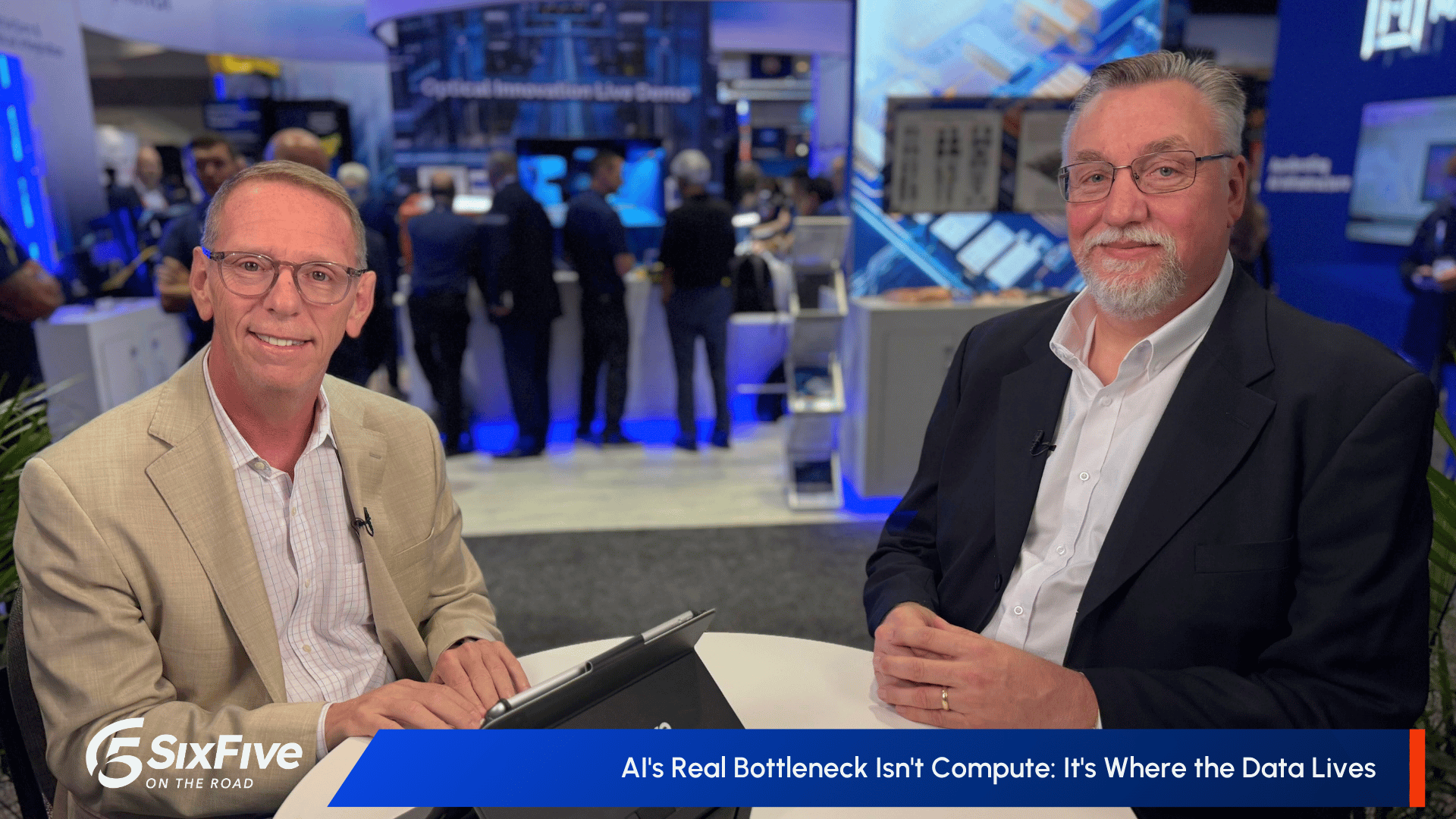
Western Digital's Tim Rausch argues that AI's compounding data growth, more than GPU capacity, sets the real ceiling on infrastructure scaling. He joins Matt Kimball at AI InfraSummit 2026 to walk through how total cost of ownership, archived data reuse, and WD's capacity roadmap are reshaping enterprise plans to scale AI over the next several years.
.png)
The Main Scoop Ep. 45: Attackers Only Need to Be Right Once. AI Just Made That Easier.
Chad Rikansrud, R&D Software Security Engineer at Broadcom, explains how frontier AI models are finding decades-old mainframe vulnerabilities in seconds, collapsing the complexity advantage that once protected legacy platforms. He outlines why enterprises need faster Security Intelligence (SECINT) ingestion and disciplined human oversight to keep pace with adversaries wielding the same tools.
Other Categories
CYBERSECURITY
Threat Intelligence: Insights on Cybersecurity from Secureworks
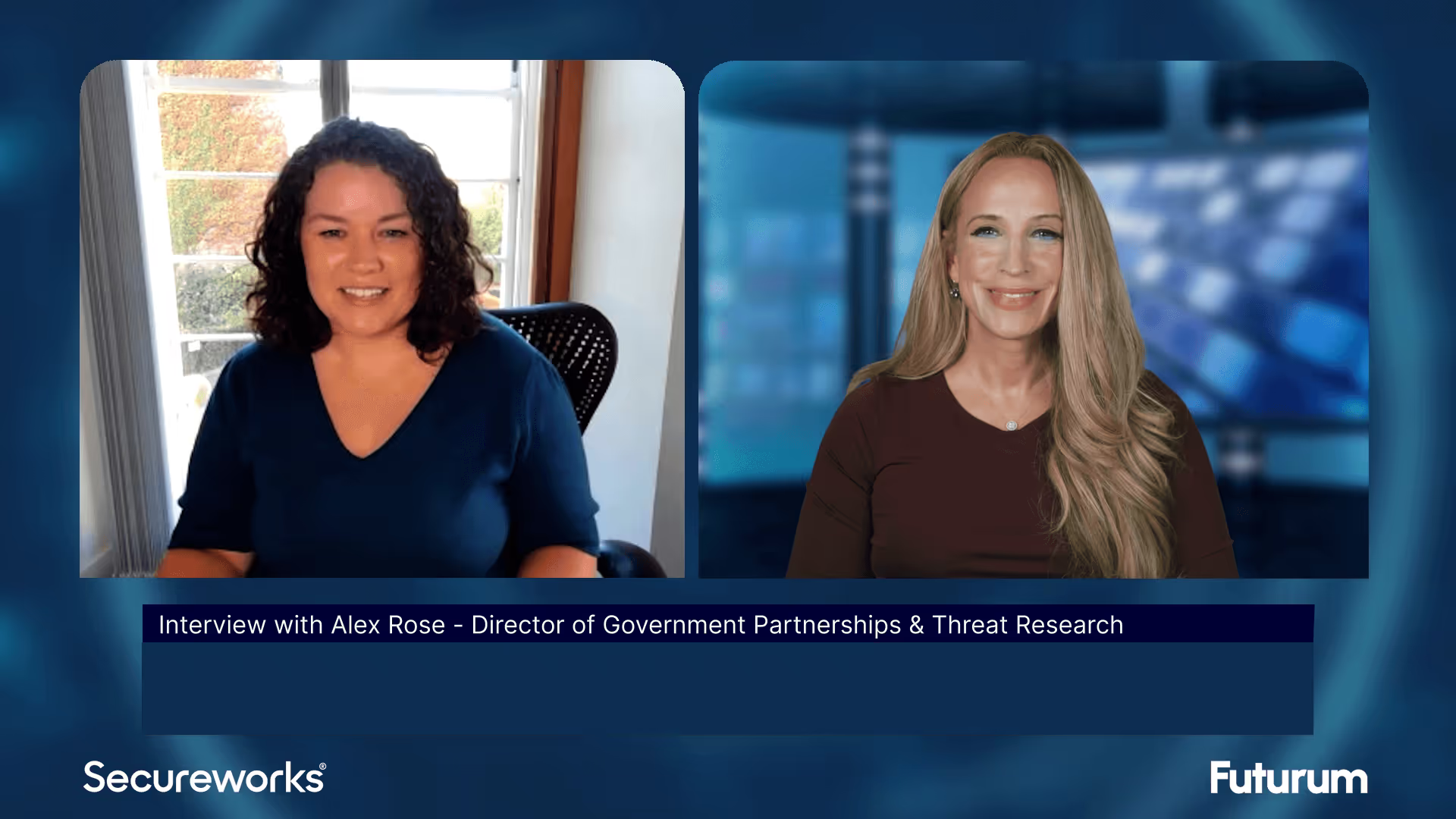
Alex Rose from Secureworks joins Shira Rubinoff on the Cybersphere to share his insights on the critical role of threat intelligence in modern cybersecurity efforts, underscoring the importance of proactive, intelligence-driven defense mechanisms.

HP Launches World’s First Business PCs to Protect Against Quantum Hacks - The Six Five On the Road
On this episode of the Six Five - On the Road, hosts Patrick Moorhead and Daniel Newman are joined by HP's Ian Pratt, Global Head of Security for Personal Systems.
What is Autonomous Endpoint Management?
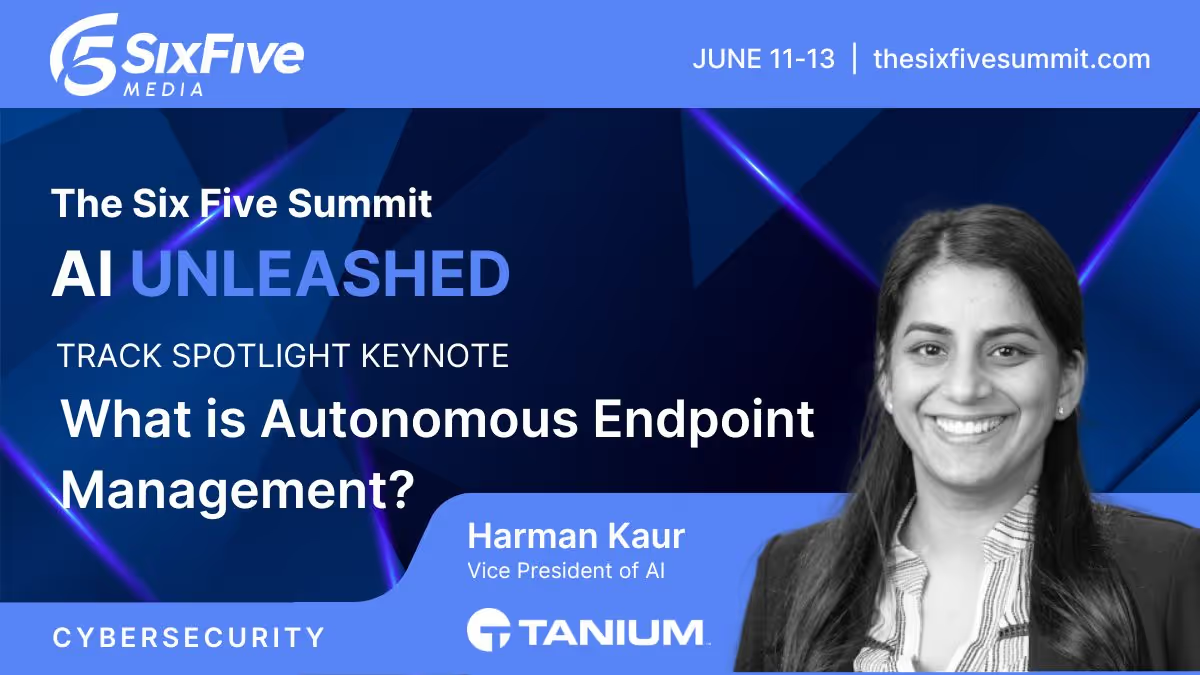
Autonomous Endpoint Management is a framework designed to unify IT operations and security teams on a single platform through real-time control and visibility.
QUANTUM
Quantum in Action: Insights and Applications with Matt Kinsella
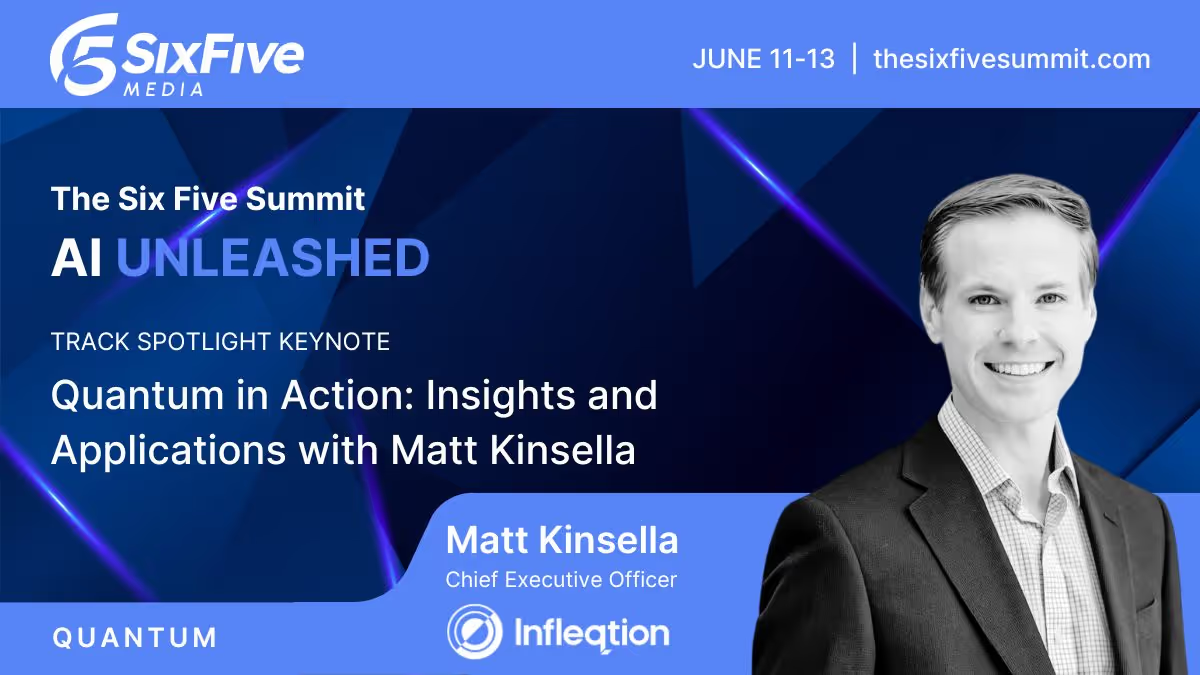
Quantum is no longer a technology of the future; the quantum opportunity is here now. During this keynote conversation, Infleqtion CEO, Matt Kinsella will explore the latest quantum developments and how organizations can best leverage quantum to their advantage.
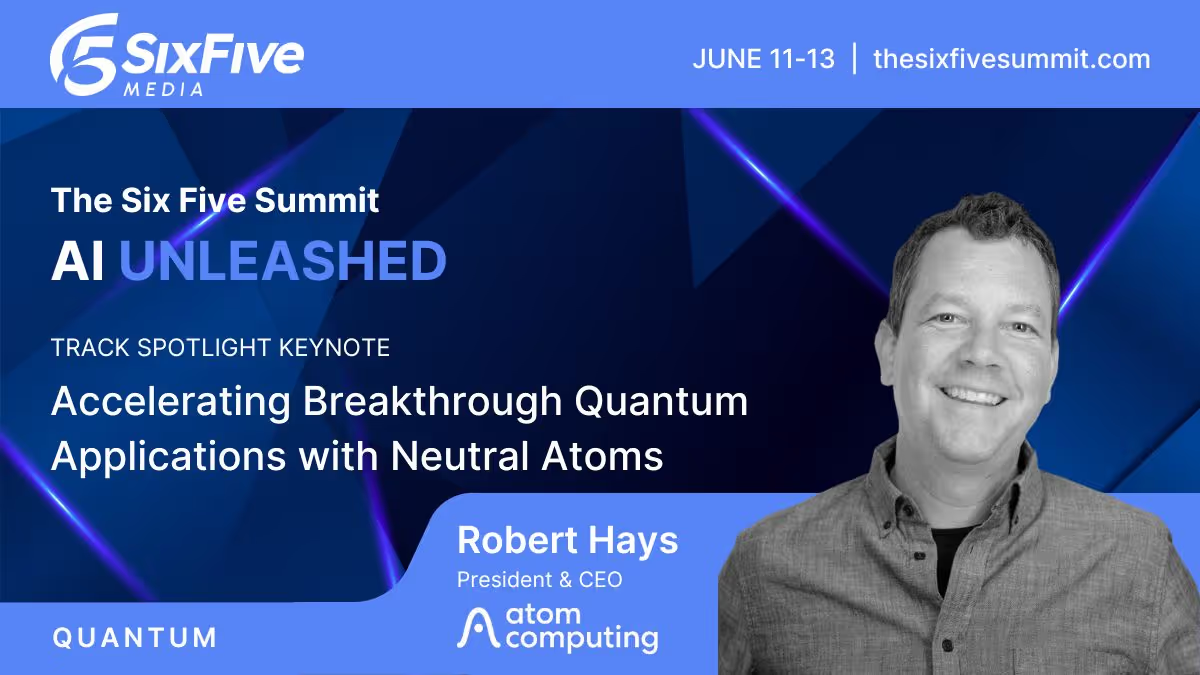
Accelerating Breakthrough Quantum Applications with Neutral Atoms
Our planet needs major breakthroughs for a more sustainable future and quantum computing promises to provide a path to new solutions in a variety of industry segments. This talk will explore what it takes for quantum computers to be able to solve these significant computational challenges, and will show that the timeline to addressing valuable applications may be sooner than previously thought.